


Introduction
Geelong has transformed from an industrial port city into one of Australia’s fastest-growing regional centers, blending coastal charm with genuine economic momentum. Just 47 miles southwest of Melbourne, this Victorian city continues to attract new residents, businesses, and visitors drawn to its waterfront lifestyle and expanding opportunities.
This guide covers Geelong‘s history, population growth, top attractions, and what makes it one of Australia’s most dynamic regional cities.
Quick Facts About Geelong
| Detail | Information |
|---|---|
| State | Victoria, Australia |
| Population (2026) | Approximately 190,619 (urban); ~225,000 (Greater Geelong) |
| Location | On Corio Bay, at the mouth of the Barwon River |
| Distance from Melbourne | Approximately 47 miles (75 km) southwest |
| Status | Largest non-capital city in Victoria |
| Name Origin | From “Jillong,” a local Wathaurong Aboriginal name |
| Local AFL Club | Geelong Football Club (Geelong Cats) |
A Brief History of Geelong
Geelong’s name derives from “Jillong,” a Wathaurong Aboriginal word connected to the local region, reflecting the deep Indigenous history of the area long before European settlement. The Wathaurong people are recognized as the Traditional Owners and Custodians of the land on which Geelong now sits.
Since its development as a colonial port city, Geelong grew steadily around its position on Corio Bay, becoming Victoria’s second-most populated urban area and its largest city outside of Melbourne. Over time, Geelong developed a strong industrial identity, particularly through manufacturing and shipping, before transitioning in recent decades toward a more diversified economy.
Geelong’s Population and Growth
As of 2026, Geelong’s urban population is estimated at approximately 190,619 people, reflecting continued steady growth, up by roughly 2,076 residents over the past year, a 1.1% annual increase. When accounting for the full City of Greater Geelong municipality, including surrounding urban and suburban areas, the broader population figure rises to approximately 225,000.
A Diverse, Multicultural Community
More than 78% of Geelong’s residents were born in Australia, though the city carries a rich multicultural history. The most common overseas birthplaces among residents include England, Italy, Croatia, the Netherlands, and Scotland. Notably, Geelong is home to the largest Croatian community in Australia, with roots tracing back to immigrants who arrived in the 1850s and again during and after World War II.
The city also has a significant German heritage, with German settlers founding what was originally called Germantown, now known as Grovedale, in 1849 after fleeing religious repression in Prussia.
Religious and Cultural Makeup
Catholicism remains the largest religious affiliation in Geelong, followed by residents identifying with no religion, Anglican, United Church, and Presbyterian and Reformed traditions, reflecting the city’s varied cultural and migratory history.
Population Snapshot Table
| Metric | Figure |
|---|---|
| Urban Population (2026) | ~190,619 |
| Greater Geelong Population | ~225,000 |
| Annual Growth Rate | 1.1% |
| Born in Australia | 78%+ |
| Largest Overseas Birthplace | England |
Geelong’s Growing Economy
Gelong has moved well beyond its traditional manufacturing roots to become a genuinely diversified regional economy. The city continues to attract new investment and development, a theme reflected in ongoing regional conversations, including the Gelong Advertiser’s Future Gelong conference, which explores how the region can manage rapid growth while building a more prosperous, sustainable, and connected community.
This growth has positioned Gelong as an increasingly attractive alternative to Melbourne for residents and businesses seeking a coastal lifestyle without sacrificing proximity to the state capital.
Top Attractions and Things to Do in Geelong
The Waterfront and Eastern Beach
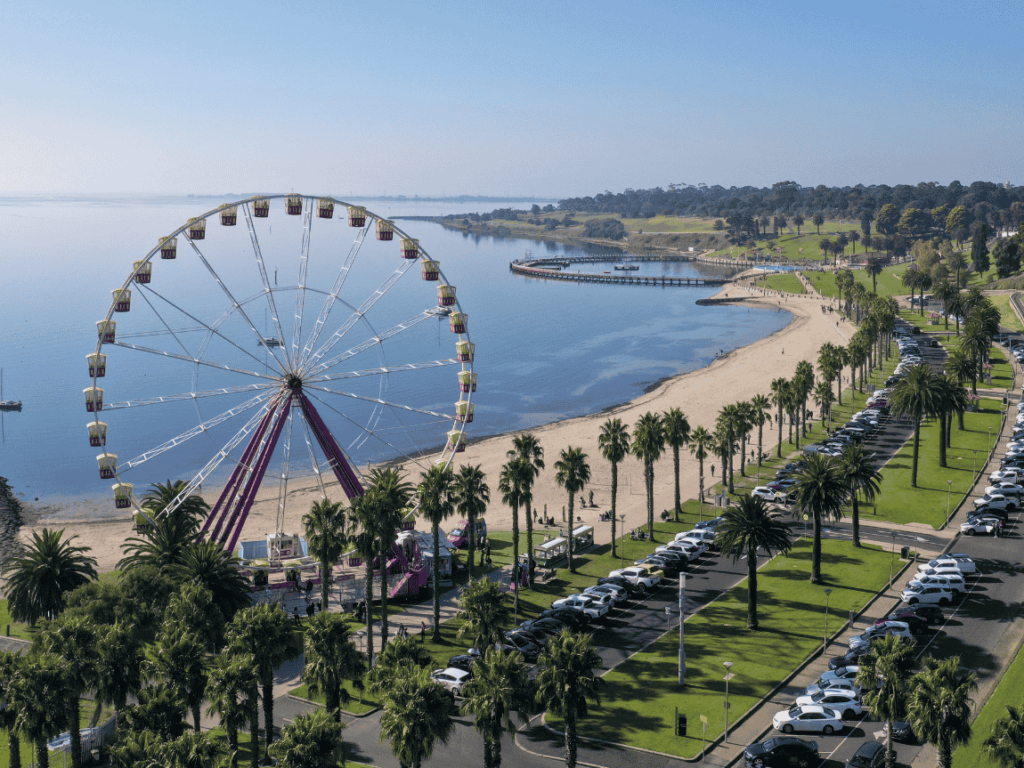
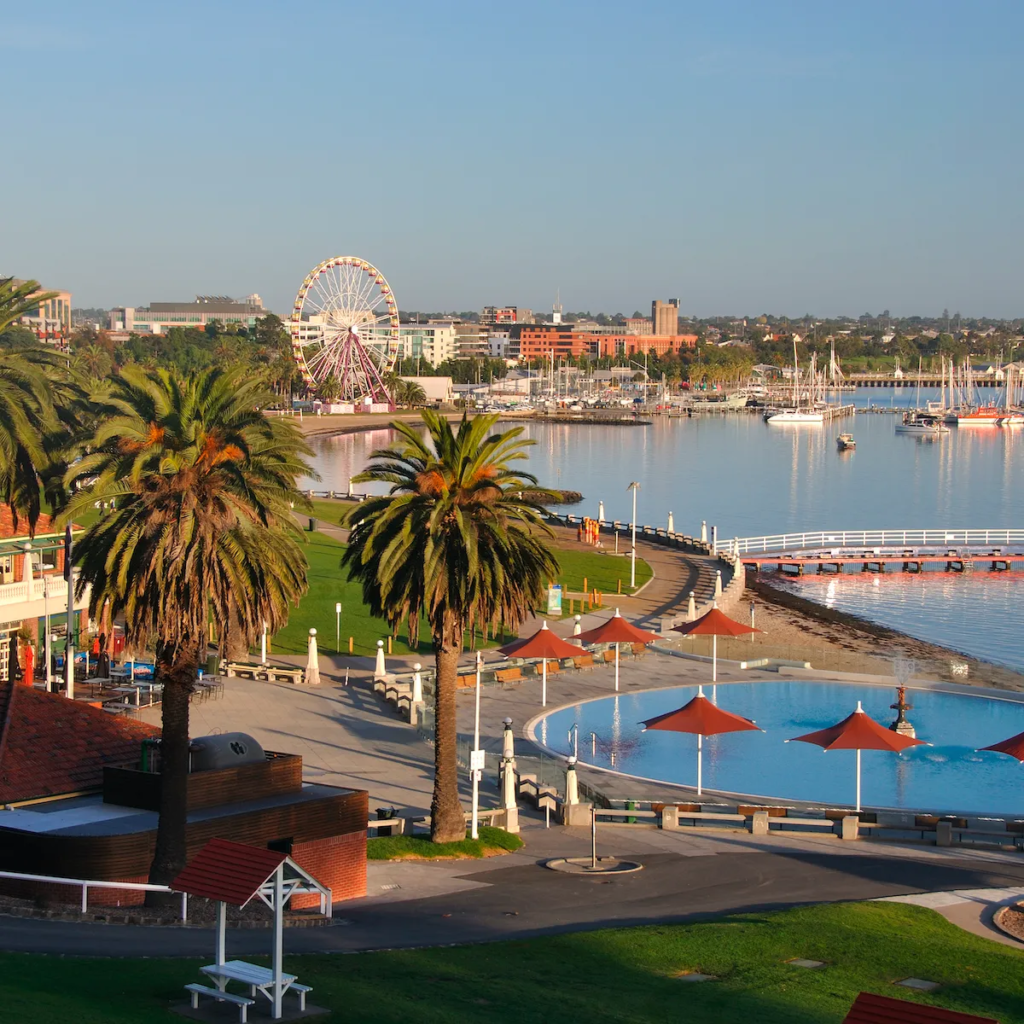
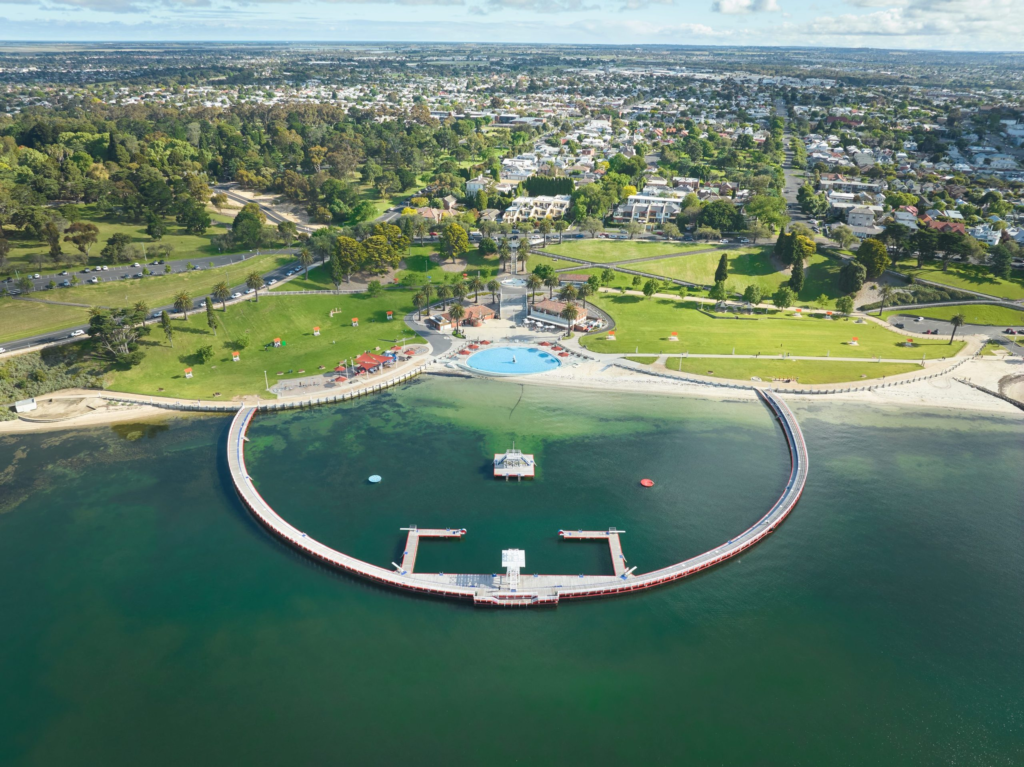
Gelong’s waterfront precinct along Corio Bay remains one of its most popular attractions, offering scenic walking paths, public art, and access to Eastern Beach, a historic swimming and recreation spot dating back generations.
Kardinia Park (GMHBA Stadium)
Kardinia Park, known commercially as GMHBA Stadium, serves as the home ground of the Gelong Football Club and hosts major Australian Football League (AFL) matches throughout the season, drawing large crowds from across the region.
The Great Ocean Road Gateway
Gelong is often considered the gateway to the Great Ocean Road, one of Australia’s most famous coastal drives, making it a popular starting point for visitors exploring Victoria’s southwestern coastline.
Community Events
Gelong hosts a growing calendar of community events throughout the year, including the Gelong Running Festival, held along Eastern Beach and through Kardinia Park, and other local charity and sporting events that draw participants from across the region.
The Geelong Football Club: A Local Institution
The Gelong Football Club, known as the Gelong Cats, plays a significant role in the city’s identity and community life. Competing in the Australian Football League (AFL), the club is one of the most successful and well-supported teams in the competition, with a passionate local fanbase and a home ground at GMHBA Stadium.
The club also fields teams in the AFL Women’s (AFLW) competition, along with men’s and women’s reserves sides in the Victorian Football League (VFL) and VFL Women’s competitions, reflecting its broad, community-embedded footprint across the region.
Why Geelong Continues to Attract New Residents
Several factors help explain the city’s ongoing growth and appeal:
- A genuine coastal lifestyle, centered around Corio Bay and Eastern Beach
- Proximity to Melbourne, offering a regional lifestyle without full separation from the capital
- A diversifying economy, moving beyond its traditional manufacturing base
- Strong community identity, anchored by institutions like the Gelong Football Club
- Gateway access to the Great Ocean Road, appealing to both residents and visitors
FAQs About Geelong
1. Where is Gelong located? Gelong is located in Victoria, Australia, on Corio Bay at the mouth of the Barwon River, approximately 47 miles (75 km) southwest of Melbourne.
2. What is Gelong’s population in 2026? Gelong’s urban population is estimated at approximately 190,619 people, while the broader Greater Gelong area has a population of around 225,000.
3. Where does the name Gelong come from? The name comes from “Jillong,” a local Wathaurong Aboriginal name for the region.
4. What is Gelong known for? Gelong is known for its waterfront lifestyle, its role as the gateway to the Great Ocean Road, its Croatian and German heritage communities, and its AFL club, the Gelong Cats.
5. Is Gelong a good place to live? Many residents are drawn to Gelong for its coastal lifestyle, relative affordability compared to Melbourne, and its steadily diversifying economy, contributing to its continued population growth.
Conclusion
Gelong stands out as one of Australia’s most dynamic regional cities, blending a rich multicultural history with steady population and economic growth heading into 2026. From its scenic waterfront and Great Ocean Road access to its strong community identity anchored by the Gelong Football Club, the city offers a compelling mix of coastal lifestyle and genuine opportunity.
As Gelong continues to grow, it remains one of Victoria’s most closely watched and increasingly popular regional destinations.
